

Next steps in early-stage
type 1 diabetes
“If you take care of yourself, you don’t wait for something to happen to you. It’s hard to get through that trauma [of diagnosis], not only physically but mentally too. If you can anticipate it, it’s important and better for your body and your health.”
Taking the next steps to manage your condition
Your screening results showed that you have early-stage type 1 diabetes. This means that changes have started happening in your body, even though you might not feel them yet.1
While the results are a lot to process, finding type 1 diabetes early (in Stage 1 or 2) can give you a big advantage over a late diagnosis. For example, it may help you avoid the risk of serious medical emergencies like diabetic ketoacidosis (DKA). Also, with more time on your hands, you can gain a better understanding of the condition and learn how to monitor blood glucose (sugar) levels closely with your healthcare team.2
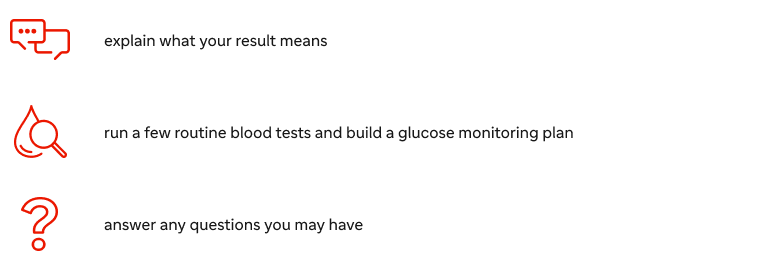
Wondering what happens next? When you head in for your next appointment, your healthcare team may:
Talking to your healthcare team about early-stage type 1 diabetes
Try jotting down a few questions before your appointment to help you feel more at ease. Here are a few examples you can use to help guide the conversation:
- Where can I find support for my condition?
- How do I tell my employer about my condition?
- Will my condition get worse?
- What are the signs and symptoms of type 1 diabetes?
- What does glucose monitoring involve?

Monitoring your blood glucose levels
Early-stage type 1 diabetes moves at its own pace. For some, it develops quickly, for others it takes time. Because of this, checking your blood glucose is the most important step in managing the condition.3 Doing this helps you and your healthcare team track any changes and figure out exactly when your body might need insulin to help balance your glucose levels.
Most people don’t need insulin until Stage 3 (often called clinical type 1 diabetes), which is when noticeable symptoms usually begin.4,5 By this stage, your pancreas isn’t making enough insulin on its own to manage your blood glucose, so taking insulin becomes the next step in your treatment plan.5
By keeping a regular eye on your blood glucose, you and your doctor can catch any changes early. This is the best way to stay well by avoiding serious medical emergencies like diabetic ketoacidosis (or DKA).2
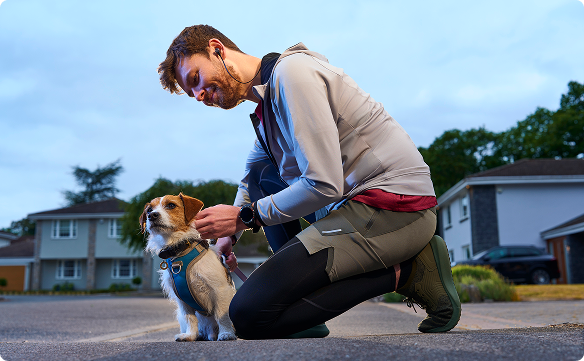
There are a few different ways you can check your blood glucose levels, your healthcare team will find the most suitable option for you6:

Blood glucose meter
This is a finger-prick or blood test test which gives an accurate blood glucose reading

Continuous blood glucose monitor (CGM)
Your blood glucose level is constantly measured in real-time. Small sensors, attached to areas of your body, send readings to a handset or smartphone app
Flash glucose monitoring
You wear a small sensor on your upper arm and scan it with your smartphone app or reader whenever you need a blood glucose reading
To help you prepare for your visit, download the type 1 diabetes companion guide in the support section below and take it with you to your next appointment.
You may find it useful to ask and make notes on questions like6:
- How often should I check my blood glucose?
- What is my ideal blood glucose target?
- What if my blood glucose numbers are outside of the target?
- How can I improve or maintain my blood glucose levels?
Key things to remember
- Getting an early-stage type 1 diabetes result might feel worrying but you’re never alone as support is always available for you
- Finding it early gives you a good head start, allowing time to prepare for treatment and glucose monitoring
- Monitoring blood glucose helps you and your healthcare team track any changes over time. This makes it easier to adjust your care plan and stay well, by avoiding serious medical complications like DKA

Support is available
We know this journey can feel overwhelming, so we created a couple of tools below to help make day-to-day life a little easier for parents and caregivers of children with early-stage type 1 diabetes.
Use this handbook as your go-to guide. It’s designed to help you understand your child’s early-stage type 1 diabetes. Inside, you'll learn how to:
- anticipate what your child might need day-to-day
- partner with your care team to check their health over time
- help avoid serious medical emergencies in the future
- feel fully prepared if or when symptoms of type 1 diabetes start to appear

References
- Sims EK, Besser REJ, Dayan C, et al. Diabetes. 2022;71(4):610-623.
- Moore DJ, Leibel NI, Polonsky W, et al. Int J Gen Med. 2024;17:3003-3014.
- US Centers for disease Prevention and Control. Monitoring your blood sugar. Accessed September, 2026. https://www.cdc.gov/diabetes/diabetes-testing/monitoring-blood-sugar.html
- Scheiner G, Weiner S, Kruger DF, et al. ADCES in Practice. 2022;10(5):20-25.
- Breakthrough T1D. The stages of type 1 diabetes. Accessed September, 2026. https://breakthrought1d.org.au/what-is-t1d/stages/
- Breakthrough T1D. Managing blood glucose levels. Accessed September, 2026. https://breakthrought1d.org.uk/knowledge-support/managing-type-1-diabetes/managing-blood-glucose-levels/
MAT-GLB-2603624-v1.0-09/2026