

Rebalancing the immune system with immunomodulation
The immune system protects the body by keeping a balance between fighting threats and leaving healthy cells alone.
Here you’ll learn what helps keep this balance, what happens when it breaks down and how some treatments can restore it.
The immune system: A balancing act
Every day, the immune system protects you from viruses, bacteria and other harmful intruders by recognising what belongs to your body (i.e. is part of your ‘self’) and what is alien to your body.1
Normally, it keeps a careful balance between two important tasks1:
- attacking what’s dangerous (microbes, abnormal cells)
- leaving anything it recognises as part of the ‘self’ alone
When it detects a problem, it sends immune cells to sort the issue. These immune cells only target the problem, leaving healthy cells alone.2
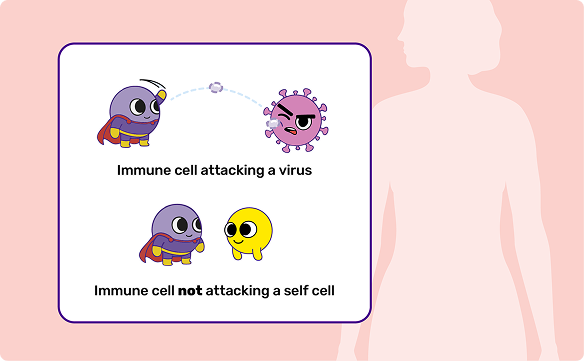
How your immune system knows what to attack and what to protect
Your immune system has built-in safety checks that help it attack harmful intruders without damaging your own healthy cells.3
Together, these safety checks help establish immune tolerance.3
Checks include3:
- Early quality control: as immune cells develop, the ones that could attack the body’s own healthy cells are removed
- Continuous surveillance: if any of these cells are missed, other parts of the immune system find and remove them
Autoimmunity: When the balance breaks down
In autoimmune conditions, immune tolerance is lost.3
This happens when:
- some immune cells that could attack healthy cells are not removed during the immune system’s early safety checks4
- the checks that keep these cells under control become weaker, allowing them to attack healthy cells5
As a result, the immune system can no longer tell friend from foe and mistakenly attacks the body’s own healthy cells.2
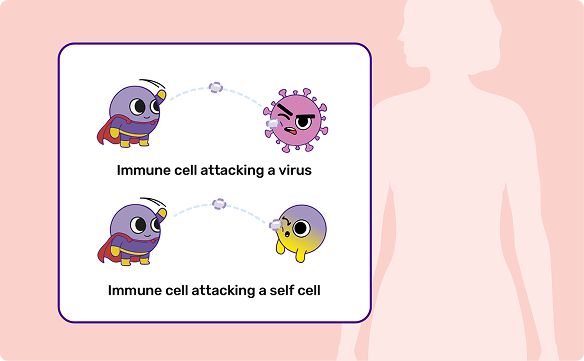
Autoantibodies: Signals of a misdirected immune reaction
When the immune system detects a threat, it produces special proteins called antibodies. Antibodies help the body fight infections and clear away old or damaged cells.6,7 Think of antibodies as tags that mark harmful intruders so the immune system knows what to attack.6,7
In autoimmune conditions, the immune system produces autoantibodies that mistakenly target the body’s own healthy cells instead of true threats.6,7
Autoantibodies can be detected in the blood. Their presence can be a sign that the immune system is attacking the body’s own healthy cells, which is why they are often used to help diagnose autoimmune disease.6,7
Restoring balance: Immunomodulation
Traditionally, treatments for autoimmune conditions have focused on reducing the activity of the immune system.8
Newer approaches take a different path.
Instead of reducing the activity of the whole immune system, they aim to8:
- adjust the activity of specific parts of the immune system
- support the immune system’s natural safety checks
- preserve the body’s ability to fight off true threats
This approach is known as immunomodulation because it aims to modulate the immune system rather than suppress it.
Immunomodulatory treatments target specific parts of the immune system that are involved in the problem.8
This allows them to8:
- target the specific cells or signals driving the autoimmune response
- reduce damage to healthy tissues
- maintain normal immune function
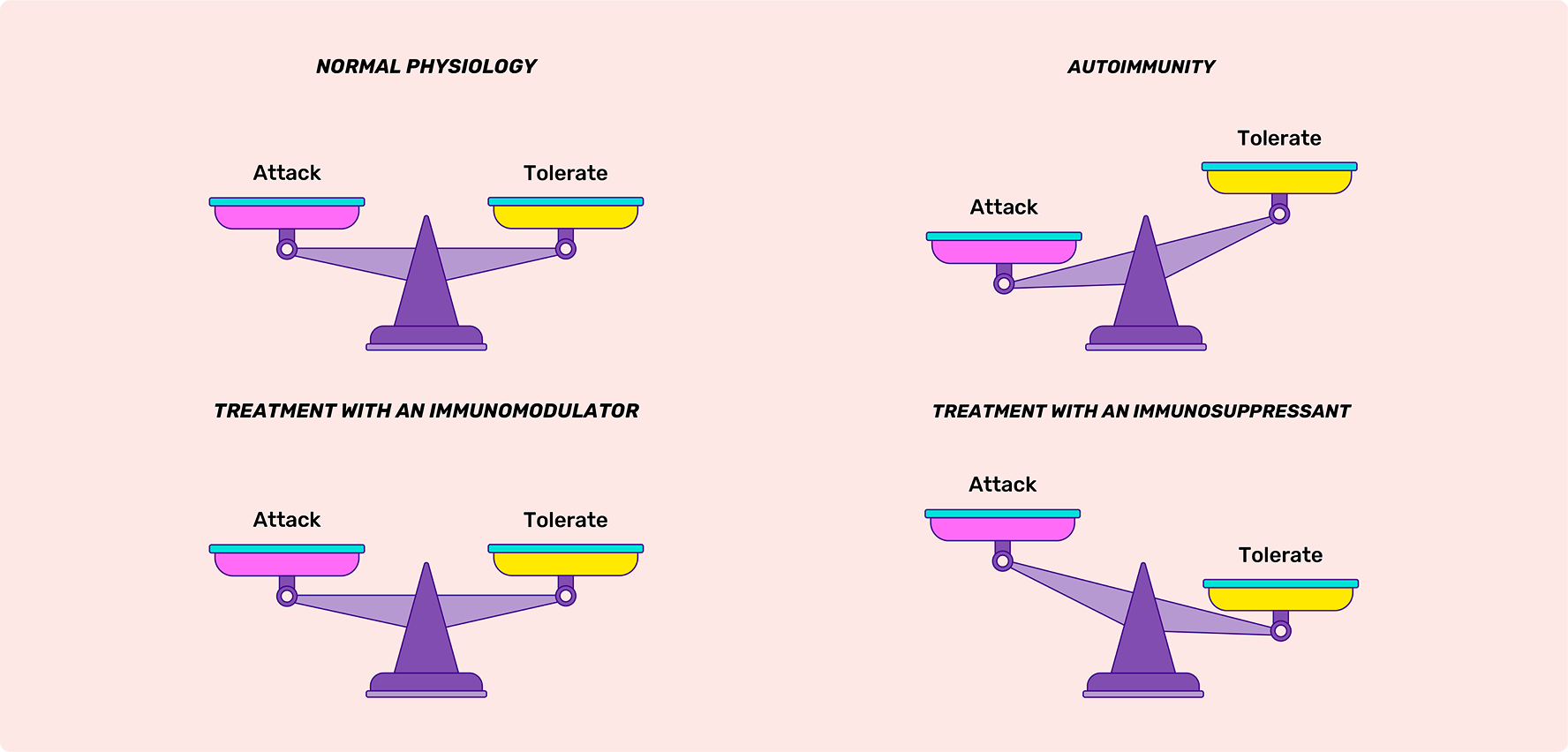
Understanding the different approaches that influence immune activity
Immunomodulation
Immunomodulation aims to restore balance within the immune system. By targeting specific cells or signals responsible for tissue damage, immunomodulators can reduce harmful immune activity while allowing the rest of the immune system to continue protecting the body from infections.8
Immunosuppression
Immunosuppression takes a different approach. Immunosuppressants stop damage to healthy tissues by reducing the activity of the entire immune system. However, this means normal immune defences are also lowered, which can increase chances of getting an infection.9
Key things to remember
- A healthy immune system relies on a balance between attacking threats and leaving healthy cells alone
- Built‑in safety checks usually prevent the body from attacking itself
- In autoimmune conditions, these safety checks fail, allowing the immune system to damage healthy tissues
- Autoantibodies can be a sign that the immune system has become misdirected
- Newer treatments for autoimmune conditions aim to restore the immune system’s natural balance
References
- Cleveland Clinic. Immune System. Accessed August, 2026. https://my.clevelandclinic.org/health/body/21196-immune-system
- Healthline. Autoimmune diseases: Symptoms, causes, types and treatment guide. Accessed August, 2026. https://www.healthline.com/health/autoimmune-disorders#faq
- TeachMe Physiology. Autoimmunity. Accessed August 2026. https://teachmephysiology.com/immune-system/immune-responses/autoimmunity/
- Autoimmune Association. What causes autoimmunity? Accessed August, 2026. https://autoimmune.org/resource-center/about-autoimmunity/
- Encyclopaedia Britannica. Peripheral immune tolerance. Accessed August, 2026. https://www.britannica.com/science/peripheral-immune-tolerance
- Cleveland Clinic. Autoantibodies. Accessed August, 2026. https://my.clevelandclinic.org/health/symptoms/autoantibodies
- MedlinePlus. Autoantibody testing. Accessed August, 2026. https://medlineplus.gov/lab-tests/autoantibody-testing/
- Alsyab MA. Front Immunol. 2025;16:1647066.
- Cleveland Clinic. Immunosuppressants. Accessed August, 2026. https://my.clevelandclinic.org/health/treatments/10418-immunosuppressants
MAT-GLB-2603626-v1.0-08/2026