

Meet your beta cells:
The cells that make insulin
The first thing to know about autoimmune type 1 diabetes is that it doesn’t start suddenly. Instead, it develops over time, often without any symptoms at first.
Here, you can learn about what happens inside the body when autoimmune type 1 diabetes starts to develop, and how screening can detect the condition before you feel unwell.
Understanding this can help you decide whether screening is something to consider for yourself or a loved one.
From food to fuel – the role insulin plays
Beta cells are specialised cells in the pancreas. And very important ones, because they’re the only cells in your body that can produce the hormone insulin.1 Here’s how it works.
After you eat, the glucose (sugar) from your food enters your bloodstream. Then, insulin helps that glucose enter your cells, where it can be used for energy.1
Think of insulin like a key that ‘unlocks’ cells so that glucose can get in and get to work.1
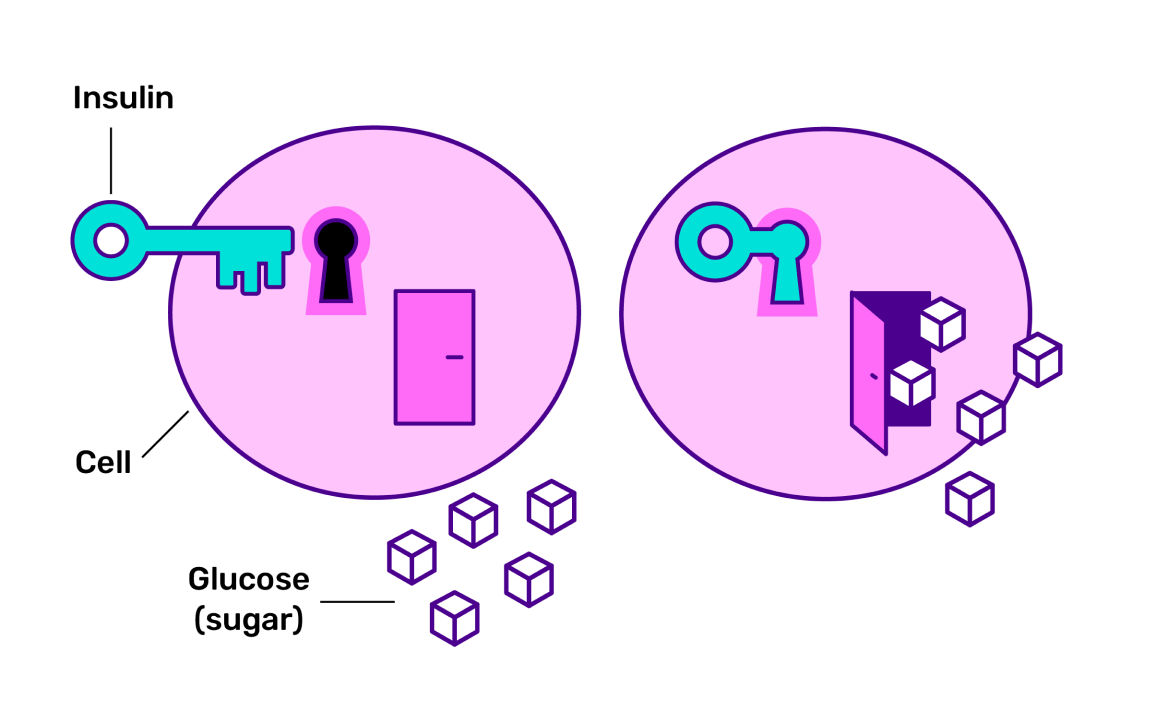
‘Blood glucose’ is just another term for ‘blood sugar’.
Your body needs glucose for energy.
Knowing what to fight - and what to leave alone. That’s how your immune system is able to protect you
Every day, your immune system protects you against viruses, bacteria and other intruders by recognising what belongs to your body (i.e. is part of your ‘self’) and what is alien to your body.2
Normally, it manages a careful balance between two opposite tasks2:
- Attacking what’s dangerous (microbes, abnormal cells)
- Leaving anything it recognises as part of the ‘self’ alone
When it detects a problem, it sends immune cells to sort the issue. These immune cells only target the problem, leaving healthy cells alone.3 But if the balance breaks down - that’s when an autoimmune reaction happens.4

Autoimmune type 1 diabetes - a clear case of mistaken identity
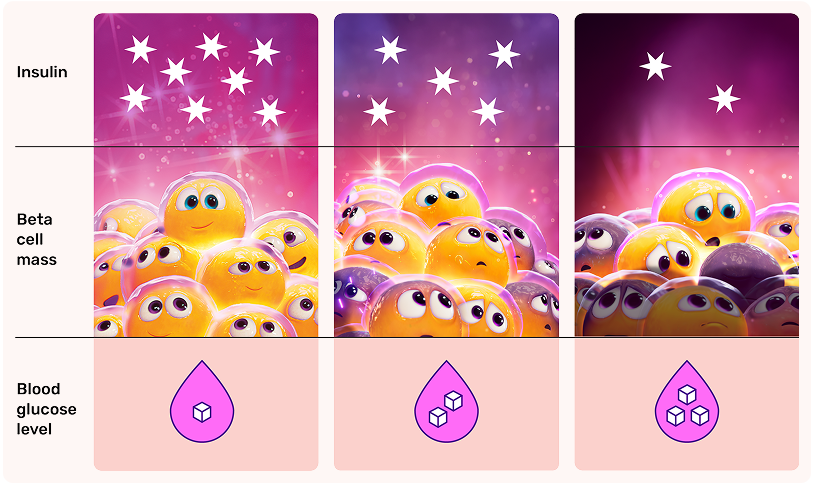
In autoimmune type 1 diabetes, the immune system mistakenly starts to attack the beta cells in the pancreas.5 As beta cells are lost, insulin production falls, causing blood glucose levels to rise.5
In its early stages, autoimmune type 1 diabetes develops gradually and silently.5 So much so, that although changes are happening inside your body, you might not feel any symptoms at this time.5

The relationship between beta cells, insulin and blood glucose
Autoantibodies are the early warning signs of autoimmune type 1 diabetes
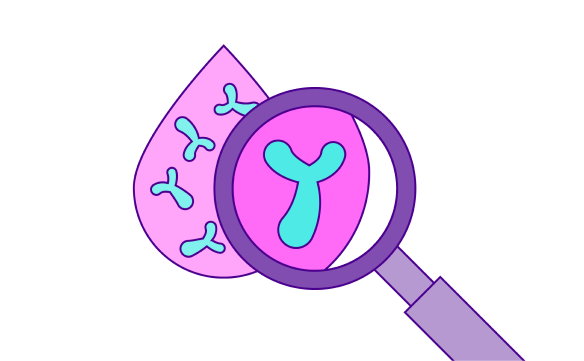
When you’re sick, your immune system makes special proteins called antibodies. Antibodies are the things that help the body fight off infection or remove old or damaged cells. They’re like tags or markers that identify something as harmful - so your body can see it and deal with it.6
But in autoimmune conditions like type 1 diabetes, the immune system produces autoantibodies that mistakenly direct the immune response towards the body’s own cells instead of true threats.6
Autoantibodies can be detected in the blood, often years before symptoms appear. This means that they can act as early signals that changes are happening.5,7
Antibodies → help defend the body (the good guys)
Autoantibodies → signal that the body is attacking itself (the not-so-good guys)
In early-stage type 1 diabetes, the immune system begins to attack beta cells in the pancreas. When this happens, specific diabetes-related autoantibodies can be detected in the blood.7,8
There are several types of diabetes‑related autoantibodies, each targeting a different part of the beta cells.7
- One type of autoantibody detected = increased risk of developing type 1 diabetes7
- Two or more types of autoantibodies detected = high likelihood of developing type 1 diabetes7
How does autoimmune type 1 diabetes develop?
Autoimmune type 1 diabetes develops when there are no longer enough beta cells to produce the insulin the body needs to use glucose for energy.5 Doctors use three stages to define how far the condition has progressed. These stages are based on the types of autoantibodies detected in the blood, blood glucose levels and whether symptoms have developed.5
Because the early stages are ‘silent’ (because they come before any symptoms), it is common for people to have the condition without knowing it.5,9,10 Timely detection of autoimmune type 1 diabetes is really important though, because if left untreated, serious complications can quickly develop.9
Staging in autoimmune type 1 diabetes9,11
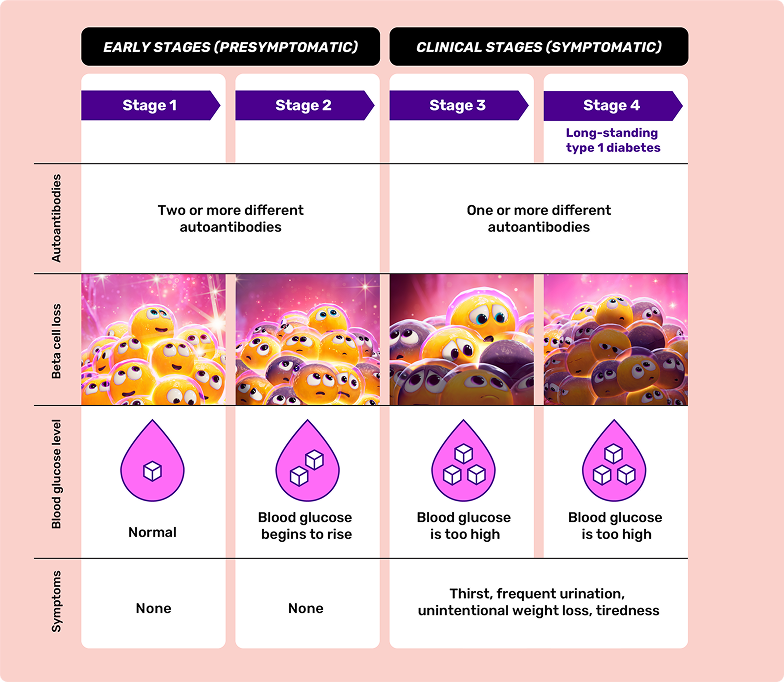
This staging system is commonly used in healthcare.
Screening for autoantibodies allows detection of type 1 diabetes in the early stages
Because diabetes-related autoantibodies appear in the early stages, screening for them can detect type 1 diabetes long before symptoms develop. Screening involves a simple blood test and allows any changes to be identified even when you feel well and there are no symptoms.7
Visit the How to get screened page to learn more about screening and how to access testing.
Why early detection of autoimmune type 1 diabetes matters
If autoimmune type 1 diabetes isn’t detected until the point at which symptoms appear12:
- blood glucose may already be very high
- the body may not have enough insulin to function properly
This can lead to diabetic ketoacidosis (DKA), a serious and potentially life‑threatening condition.9
When the body does not have enough insulin, it cannot use glucose for energy and breaks
down fat instead. This produces acids called ketones, which are normally harmless; however, in DKA, these ketones are produced too quickly and build up in the blood to unsafe levels.12
If you’re concerned about possible symptoms of type 1 diabetes, visit the signs and symptoms page to learn what to look out for.
In many cases, autoimmune type 1 diabetes isn’t detected until DKA develops – which can be a challenging and distressing way to be diagnosed.9
However, early detection through screening can:13
- clarify your risk of developing autoimmune type 1 diabetes
- kickstart regular check‑ups to track changes over time
- minimise the chance of DKA at diagnosis
- give time to plan and prepare for life with autoimmune type 1 diabetes
Key things to remember
- Autoimmune type 1 diabetes means that the immune system has mistakenly started attacking insulin‑producing beta cells
- Autoimmune type 1 diabetes develops gradually, without any symptoms at first
- Screening for markers called autoantibodies can detect autoimmune type 1 diabetes before symptoms appear
- Early detection of autoimmune type 1 diabetes can reduce the risk of serious complications
References
- Cleveland Clinic. Insulin. Accessed August, 2026. https://my.clevelandclinic.org/health/body/22601-insulin
- Cleveland Clinic. Immune System. Accessed August, 2026. https://my.clevelandclinic.org/health/body/21196-immune-system
- Healthline. Autoimmune diseases: Symptoms, causes, types and treatment guide. Accessed August, 2026. https://www.healthline.com/health/autoimmune-disorders#faq
- TeachMe Physiology. Autoimmunity. Accessed August, 2026. https://teachmephysiology.com/immune-system/immune-responses/autoimmunity/
- Breakthrough T1D (formerly JDRF). The stages of type 1 diabetes. Accessed August, 2026. https://breakthrought1d.org.au/early-detection-of-type-1-diabetes/stages/
- Cleveland Clinic. Autoantibodies. Accessed August, 2026. https://my.clevelandclinic.org/health/body/21196-immune-system
- Diabetes UK. Hot topics - detecting and treating type 1 diabetes early. Accessed August, 2026. https://www.diabetes.org.uk/our-research/about-our-research/hot-topics/can-you-prevent-type-1
- British Society of Immunology. Type 1 diabetes. Accessed August, 2026. https://www.immunology.org/public-information/bitesized-immunology/immune-dysfunction/type-1-diabetes
- Breakthrough T1D (formerly JDRF). Changing the story: Why early detection of type 1 diabetes must become the norm. Accessed August, 2026. https://breakthrought1d.org.uk/resources/why-early-detection-of-type-1-diabetes-must-become-the-norm/
- Diabetes.co.uk New international guidance for early-stage type 1 diabetes monitoring and support. Accessed August, 2026. https://www.diabetes.co.uk/news/2024/jun/new-international-guidelines-for-early-stage-type-1-diabetes-monitoring-published.html
- Diabetes UK. Early-stage type 1 diabetes. Accessed August, 2026. https://www.diabetes.org.uk/about-diabetes/type-1-diabetes/early-stage-type-1-diabetes
- Diabetes UK. What is DKA (diabetic ketoacidosis)? Accessed August, 2026. https://www.diabetes.org.uk/about-diabetes/type-1-diabetes/early-stage-type-1-diabetes
- Breakthrough T1D (formerly JDRF). Early detection of type 1 diabetes. https://breakthrought1d.org.uk/knowledge-support/early-detection-of-type-1-diabetes/
MAT-GLB-2603629-v1.0-07/2026